A Slow Walk Through a Civic Building's Entrance
A slow walk through a civic building entrance helps you spot where signs, doors, and service labels leave visitors guessing before they reach a counter.
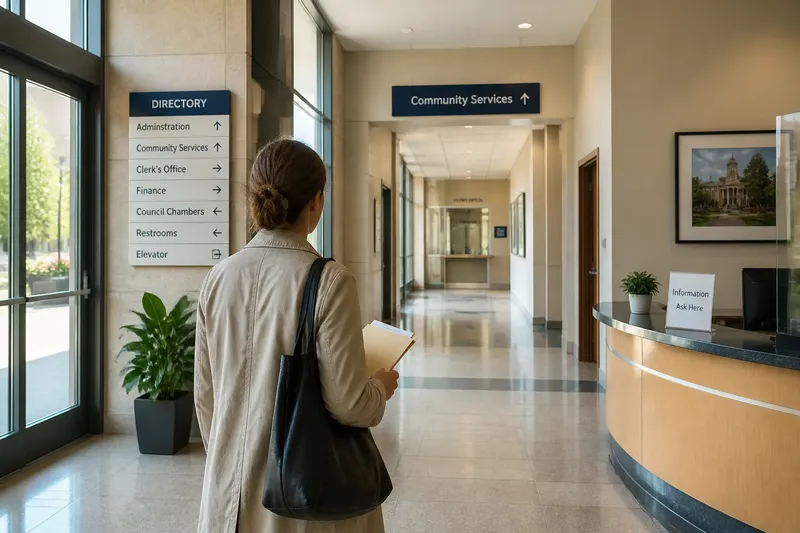
You enter a town hall looking for the public records counter. The directory points toward “Administration,” the corridor offers two doors, and neither says what happens next. A slow walk through a civic building entrance helps identify the exact point where arrival turns into guesswork, without turning a visit into a verdict on the building.
Stay in areas open to visitors, follow posted directions, and avoid recording people or private information. The subject is the route from a public approach to a clear next action: continue, wait, ask, or choose a service desk.
Where does the visitor route begin?
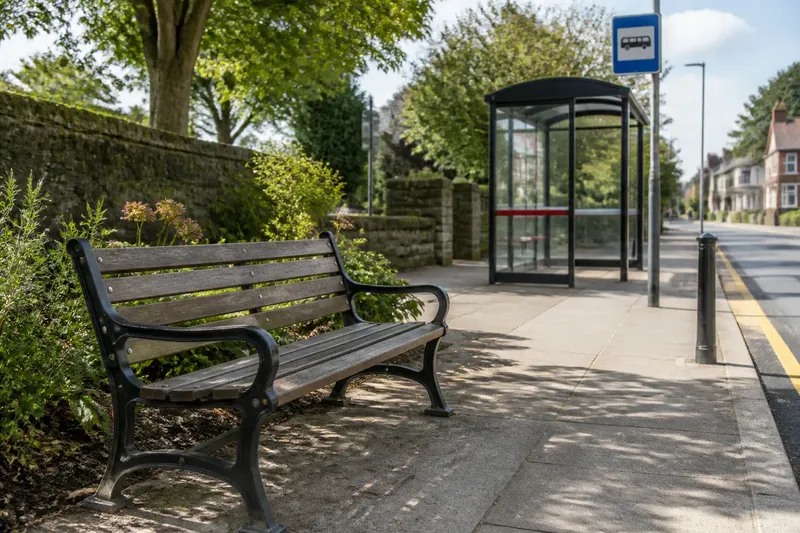
Start at the point where someone arriving on foot first has to choose a direction: a sidewalk, a path from a transit stop, or the edge of a public forecourt. From there, check whether the building name and visitor entrance are apparent. Several doors may be perfectly useful to people who work there and unhelpful to someone arriving for the first time.
Follow one route at an ordinary pace. Note the cues you actually encounter: an entrance sign, a directory, a reception desk, a change in paving, or a queue. If the public entrance is unclear from one approach, consider whether another public approach tells a different story. Record the difference rather than assigning blame to the visitor or the building.
Do signs answer the question at the right moment?
Useful directions arrive before a decision, not after it. A directory can orient someone in the lobby; a sign at a corridor junction should identify the destinations beyond the turn. The names should also remain consistent. “Records” at the entrance and “Clerk’s Office” farther in may refer to the same place, but a visitor should not have to solve that puzzle while blocking a doorway.
Separate wording from placement. A term such as “Services” may be too broad, while a clear label mounted beyond the relevant turn may simply arrive too late. Glare, a dark background, a partly open door, or a sign positioned outside the natural line of sight can also make information difficult to use. View the sign from the spot where someone needs it, rather than standing directly beneath it.
What changes at the doorway?
A threshold may include a vestibule, a second set of doors, a reception point, or a shift from open lobby to corridor. Notice what the visitor can do at each transition. Is there a visible place to wait? Does the route lead naturally toward a public desk, or does the visitor need to choose among several doors?
Pay particular attention to gaps between cues. A directory may identify a destination, then leave the visitor to reach a corridor junction with no further directions. The useful observation is where the route stops being clear: the last point with an identifiable destination and the first point that requires a guess.
What does the entrance reveal about public services?
From the doorway, a visitor might see a counter, a reception desk, an elevator, a waiting area, or only another door. A visible desk can suggest help, but it may serve appointments or staff rather than walk-in questions. Likewise, a destination hidden behind a partition may reflect a need for privacy, not an absence of service.
Imagine a visitor entering a municipal building to submit a form. From the doorway, the directory lists “Community Services,” but no counters are visible. The visitor walks toward a glass partition, where a small sign names the relevant office. On the return route, the visitor can now identify the point where the service becomes clear: not at the entrance, but at the partition. That observation is more useful than calling the lobby confusing, because it identifies the cue and where it appears.
Which entrance questions are worth answering?
How can I tell which door is for visitors?
Look for a public-facing sign, a visitor directory, or a route that visibly connects to a reception point. If several doors look plausible, note what each communicates from the approach rather than assuming the nearest one is the public entrance.
What should I check on a directory?
Check whether its destination names make sense to a visitor and whether it appears before the first choice of direction. If labels change farther inside, note where the wording shifts and what destination the change appears to describe.
How should I record a blocked sightline?
State what is visible from a particular place, such as the outer door or the lobby, and what remains out of view. Do not infer that an unseen counter is unavailable; a partition may serve privacy or operational needs.
What is not worth the effort?
Counting every sign, measuring a corridor, or guessing what a designer intended adds work without answering the visitor’s immediate question. Keep attention on the cue that helps someone decide what to do next.
How can a short entrance walk produce useful notes?
Use the route as a sequence of decisions, not as a general tour. For each stop, identify the choice a visitor faces, the cue available at that exact point, and the action that follows. The list below keeps each observation tied to a practical decision.
- Public approach: Check whether a sign identifies the visitor entrance. If it does, follow that door; if it does not, compare another public approach or ask staff which entrance serves visitors.
- First door: Check whether the door opens onto a public lobby or a staff-only area. If the route is clear, continue; if it is not, stop at the public threshold and look for posted directions rather than entering a restricted space.
- Lobby: Check whether a directory or help point names the service you need. If it does, use that destination; if it does not, ask at a public reception point instead of guessing from a broad label.
- First junction: Check whether a sign appears before the turn. If it names the destination, take that route; if it appears only afterward, return to the last clear point and ask for directions.
- Service area: Check whether counter labels distinguish walk-in services from appointment or staff functions. If the label fits your purpose, proceed; if it does not, confirm the service with staff before joining a queue.
- Threshold or partition: Check whether the next door or screen leaves the public route uncertain. If the route is marked, continue; if it is not, stay in the visitor area and seek clarification rather than testing an unmarked door.
Keep notes brief and factual: “The directory names the office, but the next sign appears beyond the corridor turn.” That says what happened and where, without claiming the entire building fails visitors. If the entrance is busy, shorten the walk and leave room for people to pass. The public lobby is not a research station, however quietly one holds a notebook.
If the route remains uncertain, ask a staff member a neutral question, such as where a first-time visitor would find the public records counter. Keep the answer distinct from the cues available before asking. That difference can help explain whether the uncertainty came from a missing direction, unfamiliar wording, or an assumption about where visitors begin.
A slow walk through a civic building entrance is most useful when it leaves one specific, actionable note: the visitor door is clear, but the directory appears after the first turn; or the counter is visible, but its service is not labeled. For anyone asking how to read a civic building entrance, that distinction is the point: describe the cue, its location, and the decision it supports. A single visit cannot settle every question, but it can identify where a clearer next move would help.